Original vs Aftermarket Parts: What You Need to Know
Original and aftermarket parts can both have a place in repair, but the right choice depends on model, part type, budget and expectations.

The words original and aftermarket are often used as if one is always good and the other is always bad. Real repair is more practical. A part choice should match the device value, the user’s needs, the repair budget and the risk of future problems. The important thing is that the customer understands what is being installed before approving the job.
What original usually means
For customers, original usually means the part is closest to factory behavior: display brightness, colors, touch feel, battery stability, connector fit and long-term consistency. In screen repairs, this matters a lot on newer iPhones because the display is one of the most visible parts of the phone. For batteries, original-grade quality matters because unstable cells can cause heat, shutdowns and poor runtime. That is why EPPY separates services such as original iPhone screen replacement and original iPhone battery replacement. The expectation and price should be clear before repair.
When aftermarket or copy parts make sense
A copy or aftermarket part can be reasonable when the phone is older, resale value is not important, or the customer wants the lowest practical repair cost. For example, copy iPhone screen replacement or copy battery replacement can make sense for a secondary device. The key is honesty. A compatible screen may differ in brightness, color, touch response or durability. A copy battery may be acceptable for a budget repair, but it should still be tested for charging stability and safe behavior. Cheap is not the same as suitable.
The part is not the whole repair
Even a good part can fail if installed badly. Screen repair depends on frame condition, adhesive, connector handling, Face ID area and post-repair testing. Battery repair depends on safe removal, connector condition, charging current and heat checks. A repair should include testing, not only installation. Diagnostics also matters. If a cracked screen hides board damage, or fast battery drain actually comes from a charging port or power fault, replacing the visible part will not solve the complaint. When symptoms overlap, start with iPhone diagnostics.
How to choose
Choose original-grade parts when the device is newer, used for work, important for resale, or expected to stay in service for a long time. Choose a copy option only when the price difference matters more than maximum quality and the limitation is understood. Compare current service options on the price list. If you are deciding after a cracked display, read what to do when an iPhone screen cracks. If the decision is about battery drain, read why your iPhone battery drains fast.
Bottom line
Original parts are usually the best choice when quality, stability and long-term use matter. Aftermarket or copy parts can be practical for older or budget-sensitive repairs. The wrong approach is not choosing a copy part; the wrong approach is choosing any part without clear expectations, diagnostics and final testing.
Warning signs after a cheap repair
A low price becomes expensive if the phone returns with new problems. Watch for uneven screen brightness, delayed touch, ghost taps, fast battery drain, heat during charging, poor speaker alignment or Face ID issues. These symptoms do not always mean the part is fake, but they do mean the repair needs testing. If the issue appears after a display repair, compare the symptoms with our cracked screen guide. If it appears after battery work, start from battery diagnostics and the guide on battery drain.
A practical decision rule
For a main phone, choose the more stable part level unless the device is near the end of its useful life. For a spare phone, a copy option can be reasonable if the limitations are clearly explained. For any phone with liquid history, charging problems or previous unknown repair, diagnostics should come first. For the next step, compare the price list with the relevant repair services. The repair logic is the same for every service area: diagnose the fault, confirm the option and test after repair.
Read next
Back to Blog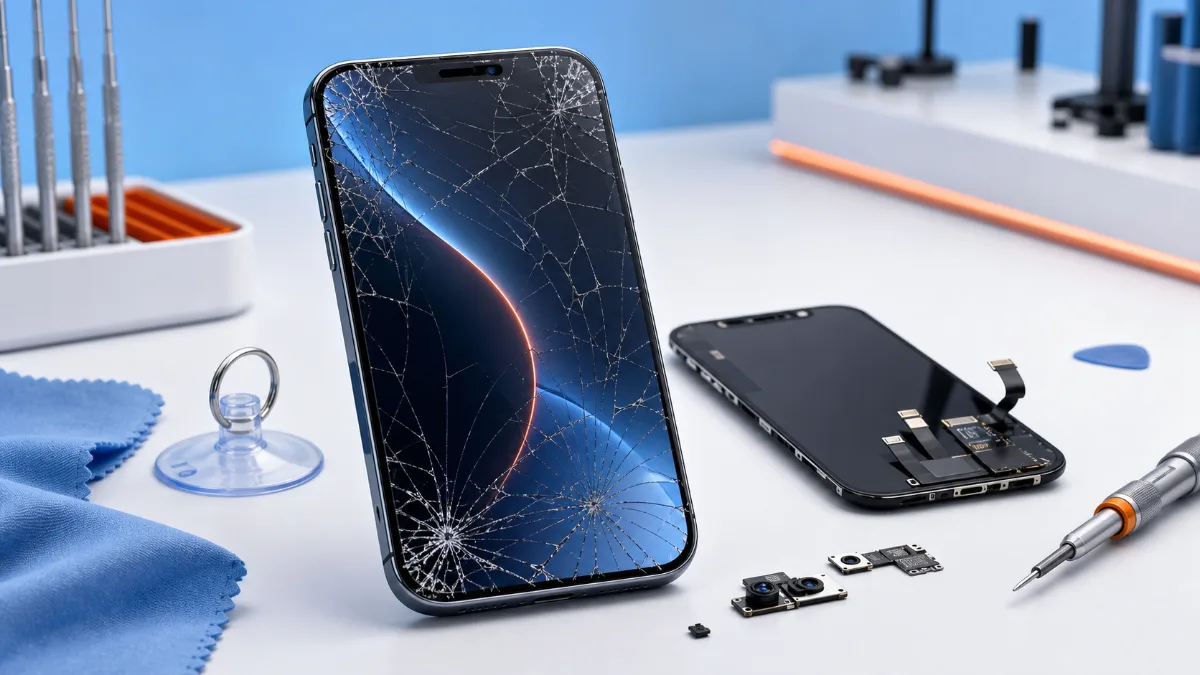
What to Do When Your iPhone Screen Cracks
What to do after an iPhone screen cracks, how to choose original or copy screen replacement and when diagnostics should come before the repair.
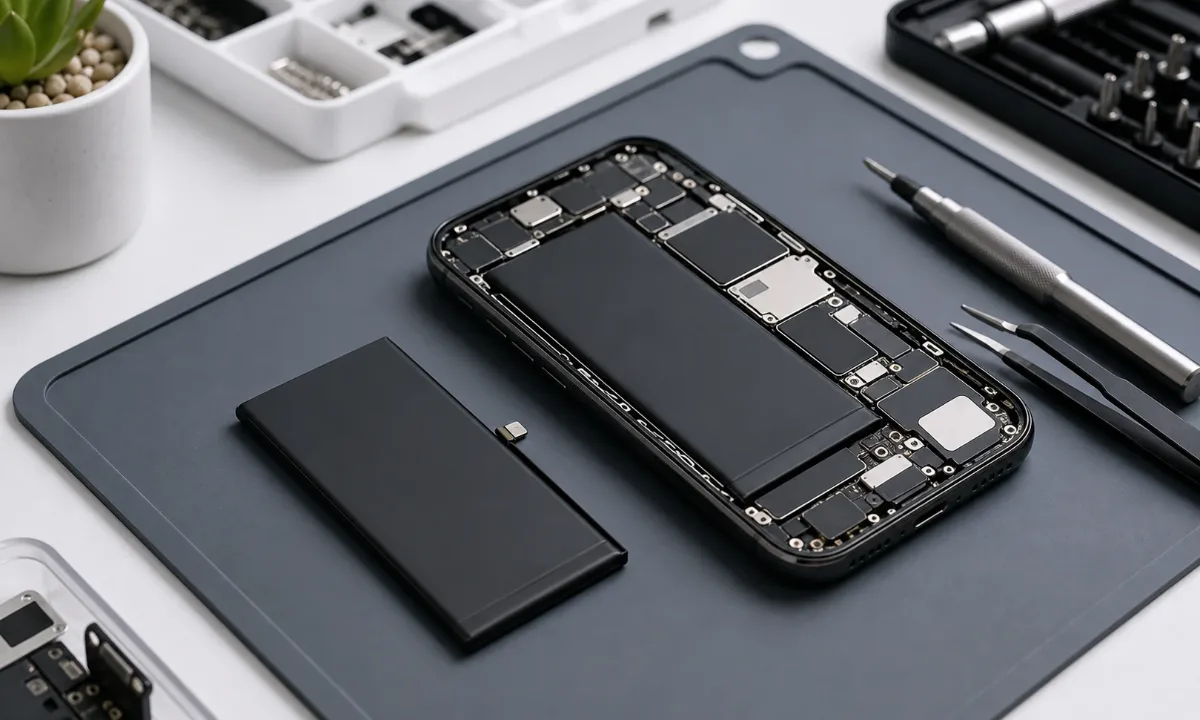
Why Your iPhone Battery Drains Fast: How to Know When Replacement Is Needed
Learn how to tell real iPhone battery wear from charging-port, software, and board-level issues before replacing the battery.

Why iPhone Gets Hot While Charging: What to Check Before Repair
A practical guide to iPhone heat during charging: charger, port, battery, software load and board-level warning signs.